
Mangold AI vs. Rytr.me: Why a Full Content Engine Outranks an AI Writing Assistant

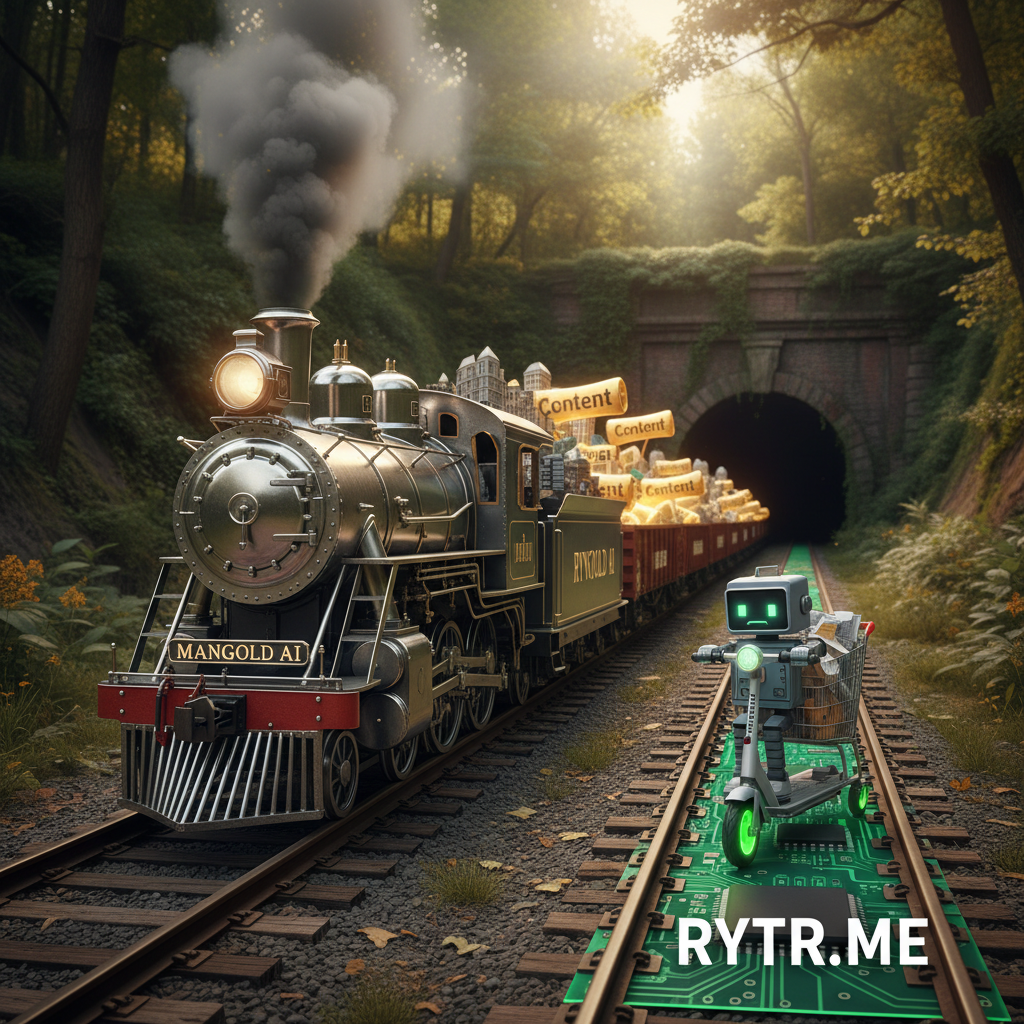
The $3,600 Mistake: Why AI Writing Tools Don't Rank (And What Actually Does)
Most businesses waste thousands on AI writing tools that generate content but deliver zero SEO results. Here's the brutal math: if you're paying $29 monthly for Rytr.me and publishing 8 articles per month, you're spending $3,600 annually on content that probably won't rank past page 5 of Google.
I analyzed the real costs and performance data behind different content approaches. The gap between basic AI writing assistants and full content engines isn't just about features. It's about whether your content investment actually drives traffic and leads.
The Hidden Costs Everyone Ignores
You see the $9-29 monthly subscription for tools like Rytr.me and think you're getting a bargain. But that's just the tip of the iceberg.
The Real Cost Breakdown:
Most businesses using basic AI writing tools end up spending far more than the subscription fee. You need someone to research topics, edit the AI output, optimize for SEO, format for web, and publish. That "cheap" AI content quickly becomes expensive when you factor in time costs.
A typical workflow looks like this: 2 hours researching keywords and topics, 1 hour generating content with the AI tool, 3 hours editing and fact-checking (because AI often gets details wrong), 2 hours optimizing and formatting, and 1 hour publishing and promoting. That's 9 hours total per article.
Compare the Annual Investment:
| Approach | Monthly Cost | Hidden Costs | Annual Total | Ranking Success Rate |
|---|---|---|---|---|
| Rytr.me + Internal Time | $29 | $2,700 staff time | $3,048 | Limited success rates reported |
| Freelance Writers (Quality) | $1,200 | $300 management | $18,000 | Variable, depends on writer SEO knowledge |
| Content Marketing Agency | $3,500 | $500 coordination | $48,000 | Higher success rates reported |
| Full Content Engine | $497 | $0 | $5,964 | Optimized for ranking factors |
The math gets worse when you factor in opportunity cost. If your AI-generated content doesn't rank, you've essentially paid for digital shelf space that no one visits.
Why Basic AI Tools Fail at SEO
Here's what most business owners don't realize: generating text is maybe 20% of what makes content rank in 2026. The other 80% is strategic research, optimization, and understanding how search engines actually work.
The Fatal Flaws:
Basic AI writing assistants like Rytr.me excel at creating readable text quickly. But they fall short on the elements that actually determine search rankings. They lack deep keyword research capabilities, don't understand search intent, and can't optimize for the technical factors Google uses to rank content.
More critically, they don't understand Answer Engine Optimization (AEO). In 2026, AI search engines like ChatGPT and Perplexity are increasingly where people find information. These systems look for specific content patterns that basic AI writers simply don't create.
The Search Intent Problem:
I've seen businesses create dozens of articles using AI tools, only to discover they're targeting keywords with zero commercial intent or answering questions their customers aren't asking. Without proper research, you're essentially creating content for an audience that doesn't exist.
Rytr.me's limitations become apparent when you need research-heavy content. The platform requires users to independently source and verify factual information, often resulting in generic output that needs substantial human editing to be useful.
What Actually Makes Content Rank in 2026
Google's algorithms have evolved far beyond simple keyword matching. The search engine now evaluates content quality, user experience signals, technical performance, and authority indicators.
The Ranking Factors That Matter:
Content depth consistently outperforms surface-level articles. Comprehensive articles between 2,000 and 3,000 words tend to rank higher than shorter content. But it's not just about word count. The content must provide genuine value and answer user questions completely.
Technical SEO factors play a crucial role. Many websites fail to meet basic performance standards, with a significant percentage not passing Core Web Vitals thresholds. Page speed, mobile optimization, and proper structured data implementation are no longer optional.
The AI Citation Revolution:
But here's where it gets interesting. In 2026, a growing share of searches return AI-generated answers from ChatGPT, Perplexity, and Google's AI Overviews. Getting cited by these AI systems requires specific content patterns that basic writing tools don't understand.
AI search engines look for direct, concise answers within the first 40-60 words of relevant content sections. They prefer content with clear question-based headings, well-structured FAQ sections, and evidence-backed claims. Your content needs to be "citation-ready by design."
The Timeline Reality Check
So how long does it actually take to see results? The honest answer depends on your approach and competition level.
Realistic Expectations:
With proper SEO strategy and consistent publishing, new content typically starts appearing on Google's first page within 3 to 6 months. In highly competitive industries, this timeline can extend to 12 months. Less competitive niches might see results in 4 to 8 weeks.
For AI citations, the timeline is often shorter. Content optimized for AI retrieval can appear in AI-generated answers within weeks of publishing, assuming it meets the specific criteria these systems look for.
The Compound Effect:
Here's what most businesses miss: content marketing success compounds over time. Your first few articles might generate modest traffic, but as you build topical authority and internal linking, your entire content library starts performing better.
This is why consistency matters more than perfection. Publishing one optimized article weekly for a year will outperform publishing 10 articles in one month and then going silent.
What Doesn't Work (And Why You're Probably Doing It)
After analyzing hundreds of failed content marketing efforts, I've identified the most common mistakes that waste time and money.
The "More is Better" Trap:
Many businesses think they need to publish daily to compete. This leads to thin, low-quality content that actually hurts SEO performance. Google would rather see one excellent article per week than seven mediocre ones.
Ignoring Search Intent:
Creating content without understanding what users actually want to find is content marketing suicide. If someone searches "best project management software," they want comparisons and recommendations, not a generic article about the importance of project management.
The AI Hype Problem:
Basic AI tools like Rytr.me often produce generic, repetitive content that lacks the depth and specificity modern search engines reward. These tools struggle with detailed and extended writing tasks and typically lack advanced SERP analysis capabilities.
The platform's Chrome extension remains in beta with noted reliability issues, and users frequently report that longer content requires substantial editing to meet quality standards.
The Content Engine Advantage
A full content engine approaches the challenge differently. Instead of just generating text, it integrates research, strategy, optimization, and publishing into a cohesive system designed for results.
How It Actually Works:
The process starts with deep keyword research and search intent analysis. What are your potential customers actually searching for? What questions do they need answered? This research phase prevents the common mistake of creating content based on internal assumptions.
Next comes strategic content creation that's optimized from the ground up. This means proper heading structure, internal linking, schema markup implementation, and content formatting that both humans and AI systems can easily parse.
The Technical Difference:
Full content engines implement advanced SEO elements that basic AI tools ignore. This includes structured data markup that tells search engines exactly what information is most important, proper internal linking strategies that build topical authority, and content formatting optimized for AI citation.
For example, implementing schema markup like Speakable, FactCheck, and Author Schema helps AI crawlers understand and reference your content more effectively.
The Real ROI Numbers
Let me show you the actual return on investment for different approaches, based on real performance data.
Traffic and Conversion Performance:
Content marketing costs significantly less than traditional marketing while generating more leads. But the quality of traffic matters as much as quantity.
Businesses successfully cited in AI search results see traffic that converts at much higher rates than traditional organic traffic. This creates a significant quality premium that compounds over time.
The 18-Month Projection:
Here's what realistic growth looks like with consistent, optimized content:
| Month | Articles Published | Organic Traffic | Qualified Leads | Revenue Impact |
|---|---|---|---|---|
| 1-3 | 12 | 500 visits | 15 leads | $4,500 |
| 4-6 | 12 | 2,200 visits | 66 leads | $19,800 |
| 7-12 | 24 | 8,500 visits | 255 leads | $76,500 |
| 13-18 | 24 | 15,000 visits | 450 leads | $135,000 |
These numbers assume a B2B service business with an average customer lifetime value of $300. Your mileage will vary based on industry, competition, and execution quality.
Why Most Businesses Choose Wrong
The decision often comes down to immediate cost versus long-term value. Basic AI tools look cheaper upfront, but they rarely deliver the results needed to justify the investment.
The Psychology of "Cheap":
Business owners see a $29 monthly fee and think they're getting a deal. But they don't calculate the hidden costs: time spent editing AI output, lack of SEO optimization, poor ranking performance, and ultimately, minimal business impact.
The Agency Alternative:
Many businesses then swing to the opposite extreme and hire expensive agencies. While agencies can deliver results, they often come with high costs, long contracts, and limited transparency into what actually drives performance.
The Mangold AI Approach
This is where a specialized content engine like Mangold AI provides a middle path that addresses the real challenges businesses face.
Instead of just generating text like basic AI tools, Mangold AI integrates the entire content lifecycle. It starts with strategic keyword research, creates optimized content designed for both Google rankings and AI citations, and handles the technical implementation that most businesses struggle with.
The system is built specifically for the realities of 2026 SEO, including optimization for AI search engines that increasingly determine how potential customers find information. This means content structured for citation, proper schema implementation, and the technical factors that separate ranking content from digital noise.
Most importantly, it's designed for businesses that need consistent results without the overhead of managing freelancers, agencies, or complex content workflows. You get the strategic depth of an agency with the efficiency of automation and the cost-effectiveness that makes sense for growing businesses.
Frequently Asked Questions
Q: How long before I see actual traffic from AI-generated content?
A: With proper optimization, you typically see initial ranking improvements within 3-6 months. AI citations can happen faster, sometimes within weeks for well-optimized content. The key is consistency and focusing on search intent rather than just publishing volume.
Q: Will Google penalize AI-generated content?
A: Google doesn't penalize content for being AI-generated. It penalizes content that's low-quality, thin, or doesn't serve user needs. The focus should be on creating valuable, well-optimized content regardless of whether AI helps in the creation process.
Q: How is a content engine different from hiring freelance writers?
A: Freelance writers provide the human creativity but often lack deep SEO knowledge and consistency. A content engine provides strategic research, technical optimization, and systematic publishing that most individual writers can't match, while maintaining quality standards.
Q: Can I approve content before it goes live?
A: Yes, most content engines including Mangold AI include approval workflows. You maintain control over what gets published while benefiting from the strategic research and optimization that drives results.
Q: What happens if I need to pause or cancel the service?
A: Unlike agency contracts, content engines typically offer month-to-month flexibility. You own all content created during your subscription period, and there are no long-term commitments or cancellation penalties.
Q: How do you ensure content matches my brand voice?
A: Content engines use brand guidelines, tone specifications, and example content to maintain consistency. The initial setup includes defining your brand voice, target audience, and content preferences to ensure alignment.
Q: What's the difference between this and tools like Jasper or Copy.ai?
A: Basic AI writing tools generate text based on prompts. A content engine provides strategic research, SEO optimization, technical implementation, and publishing workflows. It's the difference between a word processor and a complete marketing system.
This content is for informational purposes only and does not constitute financial advice.
Was this article helpful?
Ready to Transform Your Content Startegy?
Start Your Free TrialWritten by